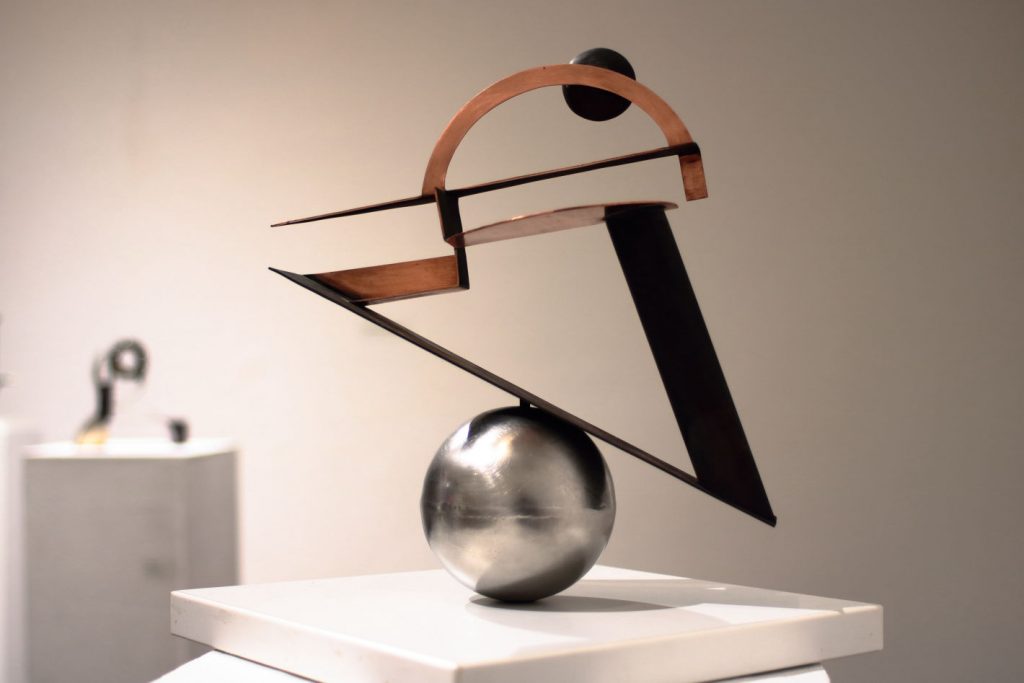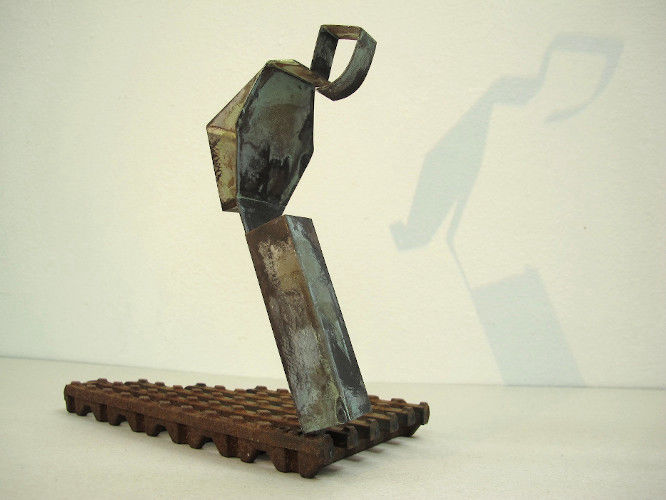
Synchronicities (2020-2022)
The concept of synchronicity was first described by the Swiss psychologist C. G. Jung in 1920. He used the word “synchronicity” to describe what he called “the coincidental occurrences of causal events”.
With this, he tried to explain the simultaneity where a certain psychological state coincides with one or more external events that appear as meaningful parallels to the current subjective state, that is, as the simultaneity of two acausally connected events.
He believed that life is not just a series of random events, but that it is an expression of a deeper order. Managing the dynamics that lie in the background of all human history and experience – social, emotional, psychological and spiritual.
This series of papers deals with the interpretation of synchronicity. Showing them as a phenomenon resulting from the interaction between inner and outer reality that acts as a mirror of the inner process in the mind and appears as an outer manifestation of inner transformations.
The goal was to explore the deeper meaning of our existence and the complexity of the universe in which we find ourselves. Point out the predictability and unpredictability of life and how they affect each other.
Through this experimental approach to the work, the sculpture becomes only a “means” for the interpretation of their synchronicities, which were then realized in the form of drawings.
Jugglers (2018)
Going deeply into the question of existentialism, man as an inexhaustible source of inspiration, irreplaceable and uniquely complex, expands this topic from a mere artistic effect to a mature intra-sculptural debate. The sculptural work Juggleri is a metaphor for contemporary life, with an emphasis on the individual as a unique, equal participant.
Following on from an earlier painting called Mechanisms, the backbone of which was the subjective experience of human life, this work wanted to expand its meaning. Pointing to the problems of the hustle and bustle of the modern age, human existence tried to be identified with juggling that requires many skills needed by a modern man, trying to encourage the observer to become aware of his own inner strength.
“We are all the same in different ways”, is the thought of the author, who through the presentation of juggling scenes as metaphorical interpretations of specific life situations in which we appear as “jugglers”, brings the development, diversity and multidimensionality of the individual. Conceptually, this work is no longer exclusively an object or space, but a transformed theoretical and linguistic expression, manifested in an original visual language. Negation of objects as exclusively one-dimensional opens up the possibility of their reinterpretation in space, unconscious reading and interpretation as symbols of emotional meanings and experiences of the human body. Fictional dynamic spatial fantasies are not limited to projection in real space, but strive for its complete occupation – the real space has become so close to the imaginary that the boundaries between them have been erased.
Through the process of construction, in which forms are rationally defined and executed exactly, the artist pays a kind of homage to the artistic phenomena of the first half of the 20th century. The combined technique of ready-made and manual metal processing revives the spirit of the works of Pablo Picasso and Marcel Duchamp; the constructivist ideas of Naum Gabo are highlighted by the shaping of surfaces, and the use of gears approaches the kinetic art of Jean Tinguely. Inspired by the waste of modern industrial civilization, either undamaged or marked by the deep traces of the passage of time, the parts of the sculptures are composed of reused iron and aluminum mechanical elements from scrap metal or second-hand fairs, at the same time refined with goldsmith’s techniques performed in JONGLERI brass and copper. Contrasts play an important role in conveying the idea of life, visible in the treatment of surfaces and shaping of lines. Planar and linearly thin masses, sharp or rounded shapes, light and dark or smooth and rough surfaces are harmoniously formed into sculptures that take the shape of the environment in which they are located, harmoniously blending with the “world of mechanisms” as a symbolic representation of life’s challenges. Juggleri also contains some unexpected spontaneous traces created under the influence of coexistence, which the author, manipulating the forms in the context of the theme, presented as part of the synchronicity of her own actions. Like their human equivalents, the sculptures have their past and future, and in the present their goal is to stop the viewer and encourage him to self-reflection.
Jugglers at Šira Gallery, Zagreb, 2019.